

SEO is not dead. Your property just needs to be findable by a different kind of searcher, and that searcher is now AI.
Something fundamental is shifting in how people find information, and by extension, how they find commercial properties. For years, the game was about ranking on the first page of Google. Get your listing visible, get your website indexed, get your content in front of the right keywords. That logic still holds. But a new layer has been added on top of it, and it changes what it means to be discoverable.
That new layer is AI. ChatGPT. Gemini. Claude. Microsoft Copilot. These are not search engines. They are answer engines. The way they work changes everything about what it means to have your commercial property be the source that gets referenced.
Google itself recently reinforced this point. SEO is not dead. But the destination has changed. Instead of a list of blue links, AI now surfaces the answer directly. The question is: where does that answer come from?
AI Assistants Do Not Know Your Property. They Reference It.
The most important thing to understand about how AI language models work in the context of property search is this: they do not generate real estate data from thin air. When someone asks ChatGPT what the best office buildings in BGC are, or asks Gemini what the current office vacancy rates in Makati look like, the AI is not inventing an answer. It is drawing from structured, indexed, publicly available information. It is referencing sources.
This is where the opportunity sits, and where the gap in the Philippine commercial real estate market becomes significant.
Right now, if an AI assistant is asked about commercial real estate in the Philippines, it has very little structured data to work with. Property listings are scattered across broker networks, Facebook groups, and general portals that were not built to present commercial data in a clean, organized, machine-readable format. There is no single authoritative source. There is no verified, searchable database of Philippine commercial properties that AI can confidently reference.
cre-book.com is being built to be exactly that source.
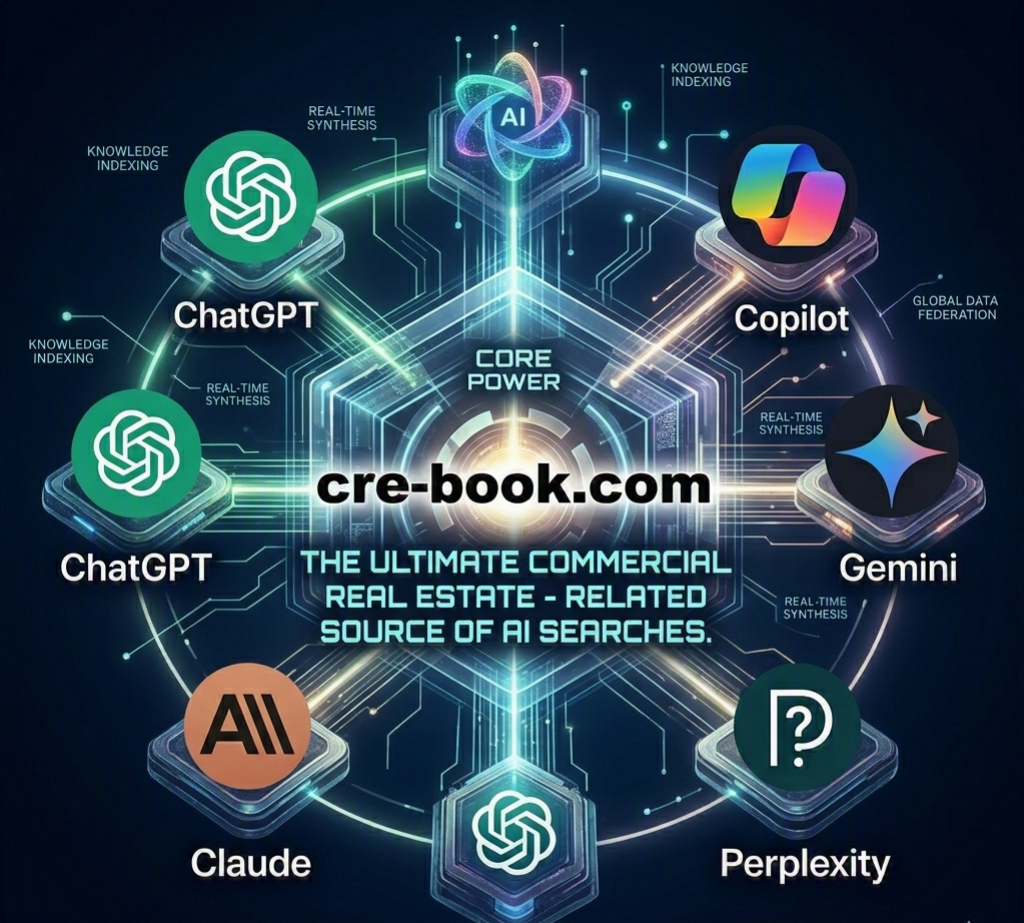
The New SEO: Be the Source, Not Just the Result
Google’s recent emphasis on AI-integrated search, through features like AI Overviews and the broader shift toward answer-first results, makes one thing clear: the platforms that win are the ones with the most complete, the most structured, and the most authoritative data. Not the ones with the most backlinks or the most keyword-heavy pages.
This is a fundamental change in what SEO means. The old game was about ranking. The new game is about being referenced. The difference matters enormously for commercial real estate.
Old SEO: rank on page 1. New SEO: be the source AI cites when it answers the question.
When a business owner asks an AI assistant where to find a 500sqm PEZA-certified office near BGC, the AI does not scroll through broker Facebook posts. It draws from the most structured, most complete, most credible data it can access. The platform that provides that data, organized by property type, location, specifications, availability, and pricing, is the platform that gets referenced in the answer.
For Philippine commercial real estate, that platform does not yet exist at national scale. cre-book.com is building it.
What This Means for Your Property
Consider how a property search actually happens today versus how it is increasingly happening.
The old path: a business looking for office space in Ortigas opens Google, searches for office space for rent in Ortigas, browses through a mix of portal listings, broker websites, and Facebook groups, and begins making calls. The process is fragmented, time-consuming, and dependent on whoever paid the most for Google Ads or published the most content.
The emerging path: the same business opens ChatGPT or Gemini, types a plain-language request for a 300sqm office in Ortigas with 24/7 access and PEZA certification, and receives a structured, directly useful answer. That answer comes from whatever platform has the most organized, most complete, most current data on Ortigas commercial properties.
The implications are direct. A property that is listed on a platform with structured, verified, complete data has a fundamentally different visibility profile than one buried in a Facebook group post or listed on a portal that was built for residential search and treats commercial listings as an afterthought.
Your property’s discoverability in the AI era depends on the quality and structure of the data that describes it, not just the photos.
Why Structure and Completeness Matter More Than Ever
AI models are not impressed by volume alone. They favor sources that are structured, specific, and verifiable. A listing that says office space for rent in BGC with instructions to call for details is invisible to AI. A listing that specifies net leasable area, building grade, PEZA certification status, floor plate configuration, power load, parking ratio, 24/7 access, multi-telco infrastructure, and lease terms is a listing that AI can work with.
This is precisely why cre-book.com’s approach to data matters. Building property listings around the actual specifications that commercial real estate finders need, organized by asset class, filterable by the criteria that drive CRE decisions, positions the platform to become the reference source that AI assistants draw from when answering Philippine CRE questions.
It is also why listing your property on cre-book.com is not just about visibility to human searchers today. It is about being part of the dataset that AI references tomorrow.
The First-Mover Advantage Is Real
There is a compounding dynamic at work here that favors early action. AI models learn from data over time. The platforms and sources that establish themselves as comprehensive, reliable references for a given category are the ones that get reinforced as authoritative sources in AI training and retrieval systems.
This is not speculative. It is how information authority works in the digital ecosystem. Wikipedia is cited by AI not because it pays for placement, but because it built the most comprehensive, structured, reliably updated reference in its category. The same dynamic applies to commercial data.
cre-book.com’s mission is to map every commercial property in the Philippines and to build the most complete, the most structured, and the most trusted dataset of Philippine CRE that exists anywhere. Every property listed on the platform contributes to that dataset. Every developer, landlord, and broker who lists on cre-book.com today is part of building the reference that AI assistants will draw from as that technology becomes the primary entry point for commercial property search.
Getting listed early is not just about today’s inquiries. It is about establishing visibility in a data ecosystem that is being built right now and that will define how commercial properties are discovered for years to come.
The Practical Takeaway
If your commercial property is not on a platform with structured, complete, machine-readable data, if it exists only in a Facebook post, a broker’s private database, or a residential portal that treats it as an afterthought, then it is invisible to the next generation of searchers.
AI assistants are not going away. They are becoming the default interface for research, decision-making, and discovery across every category. Commercial real estate in the Philippines is not exempt from this shift. The question is not whether AI will change how properties are found. The question is whether your property will be in the dataset when it does.
The platforms with the most structured, verified, complete data win the AI era. cre-book.com is building that platform for Philippine commercial real estate.
List your property on cre-book.com. Contribute to the map. Be part of the dataset that Claude, ChatGPT, Gemini, and Copilot will reference when someone asks about commercial real estate in the Philippines.
SEO is not dead. It just found a new address.
Get your property on the map at cre-book.com

Join The Discussion